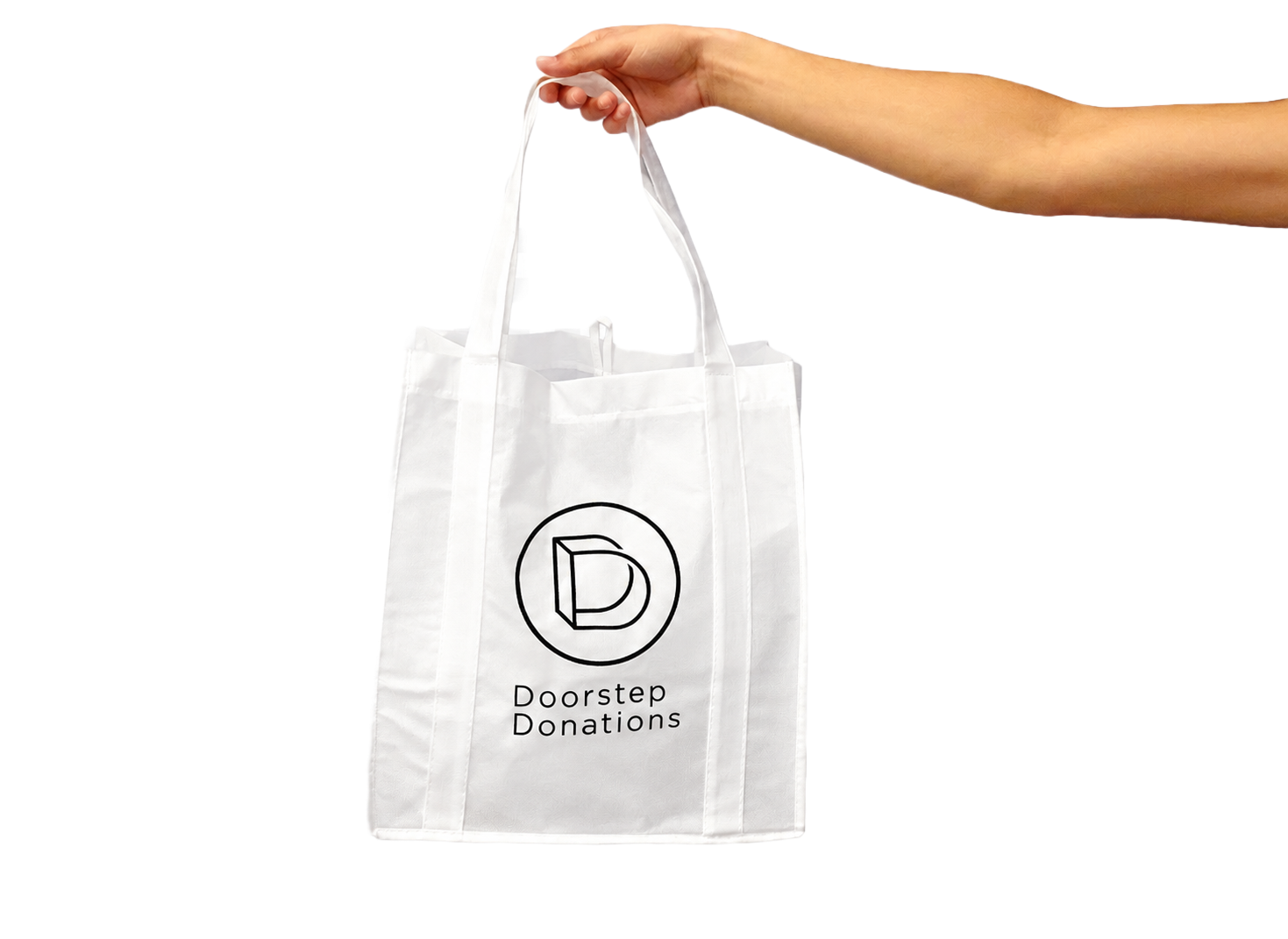
The traditional food drive is a one-off event. You hear about it, you mean to participate, you forget — or you participate once, and a year later there's another one, and you forget that one too.
Doorstep Donations was built on a simpler bet: if you make donating recurring, doorstep-based, and small enough to fit in a tote bag, ordinary households will keep doing it.
It's a Postmates-shaped model for charity — except instead of bringing food to you, students come and collect food from you. A bag, every two months, on a porch. That's it.
The numbers say the bet was right.
47.4M
Americans currently experiencing food insecurity.
13.5%
Of US households turn to charitable food services at some point each year.
2.7×
Childhood hunger today versus its peak during the Great Recession.
2020
Founded with Ryan Spiegel and Jonah Gleeman, in high school, in New Jersey.